
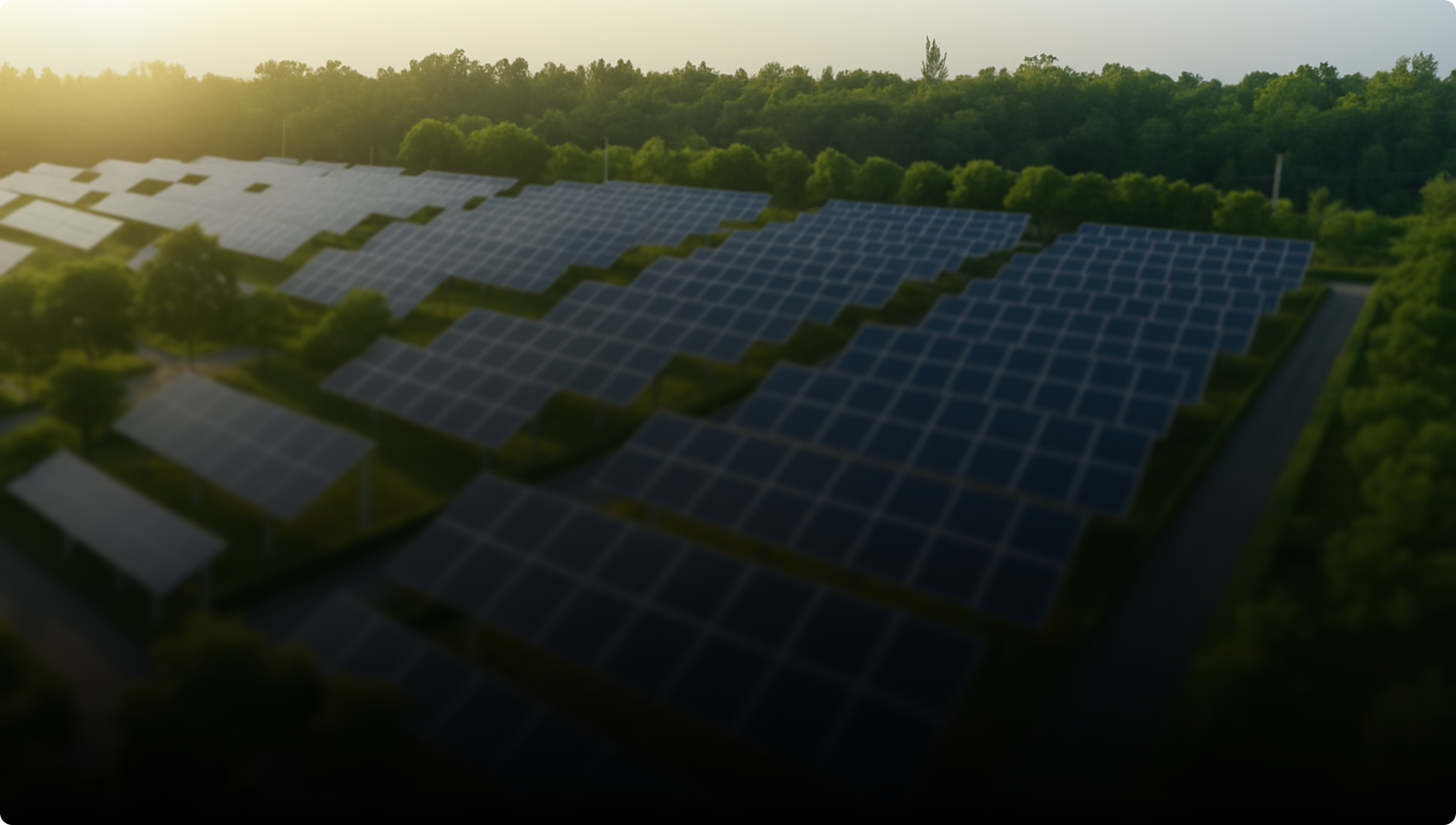




Do you want to earn money from your land or roof?
Whether it's industrial, building, or commercial land, a quarry or former quarry, a closed and reclaimed landfill, or even agricultural land, we'll analyze it for free. It could be the perfect site for a photovoltaic or agrivoltaic system, and if so, we'll send you a proposal for collaboration!
How do we value a piece of land or a roof?
Dimension
The available surface area determines the potential size of the photovoltaic system. For very small plots of land, it may not be economically viable to develop a project, while for very large ones, a different authorization process may be required. The size of the system also affects the incentives available for the energy produced.
Surface morphology
To assess the feasibility of installing a photovoltaic system on a given plot of land, it's necessary to analyze its nature, composition, and exposure. Land with heavy vegetation or a particularly rocky composition makes installing the system's supporting structures more expensive, or even impossible. Flat or hilly terrain is preferable, as it allows for optimized exposure of the panels to the sun. Finally, especially for rooftop systems, the presence of nearby structures is also analyzed, as they can cast shadows on the panels, impacting their performance and suggesting design changes to their orientation.
Distance from connection point
This aspect applies only to ground-based systems. The distance from the substation to which the system is to be connected can significantly impact the project, both in terms of costs and operational feasibility. It's always preferable to install the system as close as possible to limit the costs of building the connection line and avoid having to cross third-party land, for which the necessary right-of-way must be obtained.
Constraints
The presence of constraints can have a varying degree of impact. These range from simple mitigation work to project modifications to comply with the requirements of the authorities involved, to the complete impossibility of construction. In any case, the existence of constraints and restrictions, whether landscape, environmental, or legal, makes the permit process longer and more uncertain, requiring additional assessments and evaluations.